
UAV
LiDAR Sensors for Drones or UAVs


Key specifications
Need help confirming a selection or purchase details?
| Parameter | Value | Parameter | Value |
|---|---|---|---|
| Measuring range | 0.2 ~ 350 m | Detecting accuracy | ± 10 cm (≤ 10 m)1% (> 10 m) |
| Frame rate | 1 ~ 1000 Hz | Interface | UART, CAN, RS-232, RS-485 |
| Protection | IP67 | Dimensions | 78 mm × 67 mm × 40 mm |
| Power consumption | ≤ 1 W | Weight | 224 ± 3 g |
| Field of view | 0.35° | Output data | Single-point Distance Value |
| Operating voltage | 5 ~ 24 V |
Suitable for long-range industrial measurement, UAV payloads and engineering-equipment positioning assistance.
Condition: Bounded by the range, accuracy and operating conditions in the product datasheet.
TF350 is not intended for measurements beyond this model's datasheet range, accuracy or interface limits, and is not a substitute for certified redundant safety systems.
Condition: If the target requirement exceeds the specification boundary, complete a selection review or contact technical support first.
Set the working distance and margin for the real target reflectivity first, then compare weight, enclosure, protection, interface and update rate. These are current specification differences, not a performance ranking without matched-condition tests.
View comparison topicTFA170-L is currently specified at 0.1–170 m, about 10 g, RS-232 and 12 V for systems that need long-range input while tightly controlling payload.
Boundary: It has no enclosure; verify output rate and delivered version, and validate structural, water and thermal protection for outdoor use.
View model detailsTF03 is currently specified at 0.1–180 m and IP67 with UART, CAN, RS-232 and RS-485 for outdoor tasks that can carry about 86 g and need enclosure and interface choice.
Boundary: High rates must match baud rate and interface version; target surface, background, vibration and control latency still require system validation.
View model detailsTFA300 is currently specified at 0.1–290 m, up to 10000 Hz and IP67 with UART and CAN for tasks where long range and fast sampling both matter.
Boundary: Headline maxima do not replace tests with the real target and environment; verify power, data-link bandwidth, mounting stiffness and version together.
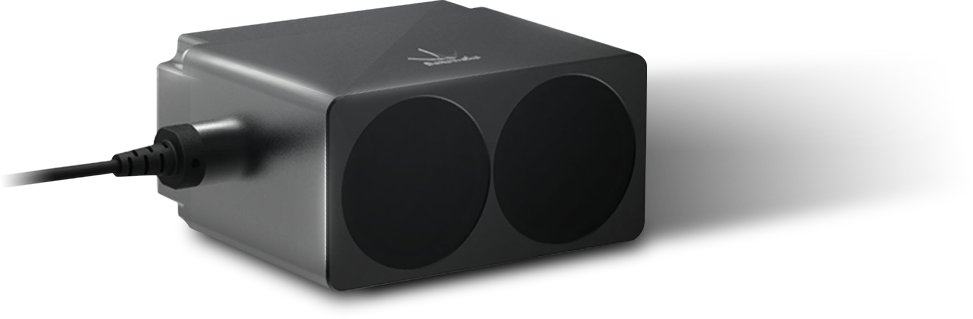
View model detailsTF350 is currently specified at 0.2–350 m and IP67 with UART, CAN, RS-232 and RS-485 for platforms prioritizing range margin and interface choice and able to carry about 224 g.
Boundary: Greater range comes with more weight and size; do not select by maximum range alone—validate target, environment, mounting and system stopping or control margin.
View model details| Parameter | TFA170-L | TF03 | TFA300 Series | TF350 |
|---|---|---|---|---|
| Measuring range | 0.1 ~ 170 m | 0.1 ~ 180 m | 0.1 ~ 290 m | 0.2 ~ 350 m |
| Detecting accuracy | ± 10 cm (< 10 m), 1% (≥ 10 m) | ± 10 cm (≤ 10 m)1% (> 10 m) | ± 10 cm (<10 m)1% (≥ 10 m) | ± 10 cm (≤ 10 m)1% (> 10 m) |
| Frame rate | 1 ~ 1000 Hz | 1 ~ 9800 Hz | 1 ~ 10,000 Hz | 1 ~ 1000 Hz |
| Interface | RS-232 | UART, CAN, RS-232, RS-485 | UART, CAN | UART, CAN, RS-232, RS-485 |
| Protection | Without enclosure | IP67 | IP67 | IP67 |
| Dimensions | 31.0 mm × 30.2 mm × 19.2 mm | 44 mm × 43 mm × 32 mm | 49.4 mm × 37.0 mm × 28.6 mm | 78 mm × 67 mm × 40 mm |
| Power consumption | ≤ 1 W | ≤ 0.8 W | ≤ 0.45 W | ≤ 1 W |
| Weight | ~ 10 g | 86 ± 3 g | 10.5 g | 224 ± 3 g |
| Field of view | < 0.5° | 0.5° | < 0.5° | 0.35° |
| Operating voltage | DC 12 ± 10% V | 5 ~ 24 V | DC 5 V ± 10% | 5 ~ 24 V |
The TF350 offers a range of 0.2–350m indoors (at 90% reflectivity) and 0.2–300m outdoors at 100Klux ambient light (at 90% reflectivity). At lower reflectivity (10%), the range is reduced to 0.2–110m indoors and 0.2–100m outdoors. This long-range capability makes it suitable for vehicle collision avoidance and traffic monitoring applications.
The TF350 offers multiple communication options: UART (3.3V LVTTL), CAN (1000 kbps standard frame), and switchable RS485/RS232 interfaces. All interfaces operate at a standard baud rate of 115200 for serial connections, with 8 data bits and 1 stop bit. This flexibility allows integration with diverse industrial control systems including PLCs, automotive ECUs, and embedded platforms.
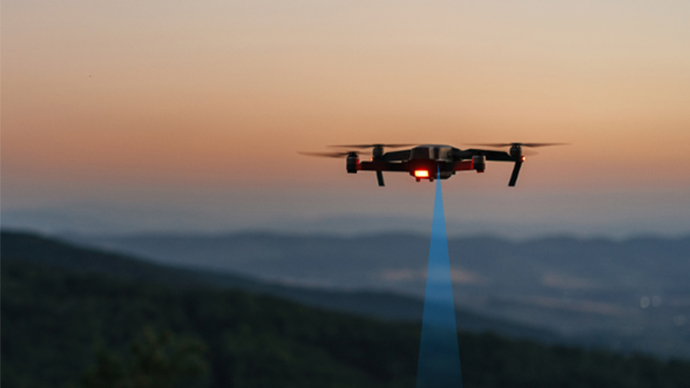
The TF350 is designed for vehicle collision avoidance and safety warning systems, traffic flow statistics collection, camera triggering, and UAV-assisted takeoff and landing. Its high frame rate (up to 1000 Hz configurable), IP67 enclosure, and long-range detection make it ideal for industrial drones, automotive safety systems, and intelligent transportation applications. It also handles outdoor glare and operates reliably in rain, fog, and snow conditions.
The TF350 provides ±10cm accuracy within 10 meters, then 1% accuracy beyond 10 meters. Its distance resolution is 1cm with repeatability (1σ) of less than 3cm. These specifications are measured at 25°C with a 90% reflectivity white board, ensuring predictable performance for precision distance measurement in industrial applications.
The TF350 has an IP67 enclosure rating, making it fully dustproof and capable of temporary immersion in water. It operates reliably across -25°C to +60°C and tolerates up to 100Klux ambient light immunity. With integrated compensation algorithms for outdoor glare and interference, it functions in moderate rain (less than 25mm/24h), snow, and fog conditions without performance degradation.
The TF350 accepts a wide supply voltage range of 5V–24V, with average current consumption of ≤150mA at 5V, ≤80mA at 12V, and ≤50mA at 24V. Total power consumption is ≤1W, making it energy-efficient for battery-powered platforms like UAVs and industrial IoT applications. This low power profile enables integration into resource-constrained systems.
The TF350 measures 78mm (length) × 67mm (width) × 40mm (height) with a weight of 222g (standard version) or 225g (RS485 version, ±3g tolerance). Its compact aluminum alloy enclosure is designed for mounting on vehicles, drones, and industrial equipment. The 70cm cable length allows flexible installation in diverse mechanical configurations.
The TF350 is not suitable for applications requiring scanning or field-of-view angles greater than 0.35° (it is a single-point sensor, not a scanning LiDAR). It is not recommended for extreme environmental conditions beyond its operating temperature range (-25°C to +60°C), heavy rainfall exceeding 25mm/24h, or applications requiring safety-grade laser sensor certifications beyond Class 1 (EN60825). It is also unsuitable as a replacement for full 3D scanning LiDAR in autonomous driving mapping tasks.
Compared to the Garmin LidarLite V3 (max range ~40m) and Lightware SF45 (scanning sensor), the TF350 offers significantly longer maximum range (350m indoors, 300m outdoors) and higher configurable frame rate (up to 1000 Hz standard, 10 kHz customizable). While the TF350 is a single-point sensor like LidarLite V3, its IP67 rating and integrated outdoor glare compensation provide superior environmental durability for industrial and automotive applications. The TF350's multi-interface support (UART/CAN/RS485/RS232) also offers more integration flexibility than competitors.
The TF350 integrates with UART/CAN-capable platforms including Arduino, ROS-compatible robotics systems, PLC controllers, automotive ECUs, and custom embedded Linux systems. The RS485/RS232 variants enable integration with legacy industrial automation systems and Modbus-based networks. Standard 115200 baud rate serial communication and configurable CAN parameters (1000 kbps) support both real-time and non-real-time applications. Detailed integration instructions are provided in the user manual for custom firmware development.
Confirm the model-specific protocol, baud rate, and interface first. A baud rate that is too low for the configured frame rate can overflow the transmit buffer. TF03 TTL/RS485/CAN commands must not be mixed with the Modbus commands for TFmini-i-485 or TF02-I-485; use the model manual.
To switch UART to CAN, send 5A 05 45 02 A6 and then 5A 04 11 6F to save. To switch CAN to UART, send 5A 05 45 01 A5 over the CAN bus and save. Reconnect using the new interface and the 250 kbps CAN configuration.
The transmit buffer may have overflowed. Use a Benewake offline downloader with the matching bin firmware and align its probes to the four-pin debug interface using the PCB GND mark. Get support guidance before doing this; in future, raise the baud rate and reconnect before raising the frame rate.
A nearby infrared source, such as a security camera illuminator, is a common cause. Capture 9-byte raw data including strength, temporarily disable or shield the suspected source, then add shielding, relocate the sensor, or revise the installation.