
News updates · 1/10/2025
How ToF LiDAR Enables Robot Accurate Obstacle Avoidance
To further understand this topic, we’ll discuss some of the challenges of robot obstacle avoidance and introduce you to some top ToF LiDAR sensors with exceptional obstacle avoidance features.
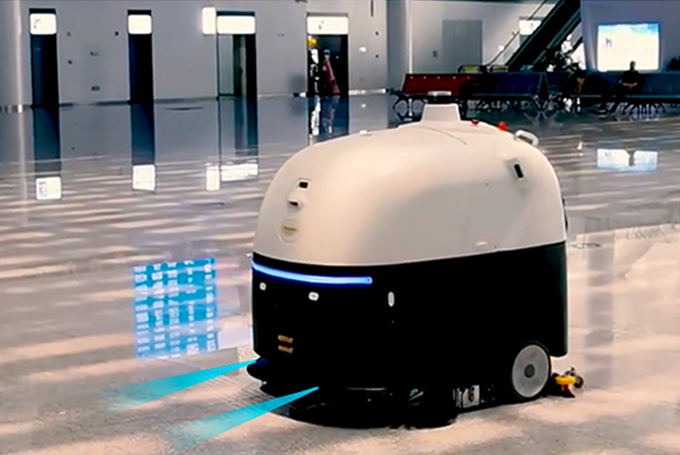
Over the last few years, robots have become prevalent in numerous industries. Whether it is construction, logistics, healthcare, or defense, robots have helped automate many processes. However, this also raises the probability of accidents between robots and their surroundings. Luckily, with ToF LiDAR (Time-of-Flight Light Detection and Ranging), the likelihood of these problems can be significantly reduced.
To further understand this topic, we’ll discuss some of the challenges of robot obstacle avoidance and introduce you to some top ToF LiDAR sensors with exceptional obstacle avoidance features.
Challenges of Robot Obstacle Avoidance
Currently, the world has 3.4 million robots being used in industries to navigate unpredictable and ever-changing environments[1]. While having obstacle avoidance features can be highly beneficial for these robots, there can also be devastating consequences if things go wrong.
1. Complex and Diverse Environmental Factors
When performing tasks, robots encounter objects of various sizes, shapes, and materials. The diversity and irregularity of these obstacles pose significant challenges to the robot, which must be able to accurately perceive, analyze, and respond in real time, selecting the optimal path for avoiding obstacles.
Additionally, black or low-reflectance objects have a strong absorption effect on light, resulting in weak reflected light received by sensors. This may prevent sensors from accurately identifying the position and shape of obstacles. Especially in conditions with low lighting or complex environments, this could lead to the misjudgment or omission of obstacles, thereby increasing the risk of collision accidents.
2. Real-Time and Accuracy Requirements
Real-time performance and accuracy are two crucial requirements in robotic obstacle avoidance, directly impacting the safety and reliability of the robot.
In practical operations, robots need to respond to suddenly appearing and unpredictable obstacles within extremely short periods. If the obstacle avoidance system reacts slowly, even if it eventually identifies the obstacle and plans an avoidance path, it may miss the optimal avoidance timing, leading to collision accidents.
In terms of accuracy, the identification and judgment of obstacles by robots must be very precise. Even deviations of just a few centimeters may cause dangerous accidents for robots, which could not only damage the robot itself but also harm the surrounding space and equipment and, in extreme cases, even injure people.
3. Explore the Energy and Cost Constraints
Another key challenge in robot obstacle avoidance is power consumption management, especially for battery-powered robots. High power consumption can lead to frequent downtimes for charging, thereby affecting the operational efficiency of the robots. LiDAR sensors with low power consumption can ensure that robots can work stably over extended periods. Moreover, as market competition intensifies, how to reduce costs while ensuring obstacle avoidance performance has become a common challenge faced by robot manufacturers and research institutions.
Benewake ToF LiDAR
1. ToF LiDAR Technical Principle
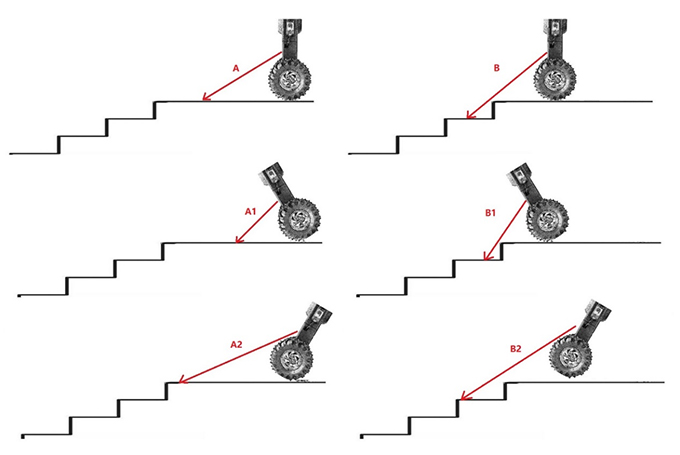
ToF LiDAR technology is based on the time-of-flight principle, which measures the flight time (round trip) of light pulses (usually invisible light) emitted and reflected from objects, thereby calculating the distance between the object and the sensor.
2. Features of Benewake ToF LiDAR
l Our Benewake ToF LiDARs can achieve long-distance detection of objects with varying sizes, including those with low reflectance.
l These LiDARs for robots are lightweight and easy to install, ensuring the robot’s functionality or payload wouldn't be interfered with.
l Our LiDAR distance sensors have low power consumption, which is beneficial for maintaining battery life in battery-operated robots.
l They are flexible with multi-interface support, including UART and IIC, allowing for seamless integration with various robotic systems.
Some notable ToF LiDARs by Benewake worth checking out are the TF-NOVA and TF-Luna.
3. TF-NOVA
TF-NOVA is a compact, high-precision linear LiDAR sensor designed for indoor and outdoor robotic applications. With its unique linear light spot and wide field of view, it excels in area detection, featuring a distinctive detection zone of 14°×1° that can cover an area of 25×1.7 centimeters at a distance of 1 meter. Its dimensions, at 26.5x21.05x12mm³, are smaller than a standard AA battery, providing great convenience and flexibility for system integration. TF-NOVA reliably detects targets with a diameter of 5 centimeters and a reflectivity of 10% within a range of 2 meters, even in bright sunlight or low-light conditions. Impressively, during summer, it can even detect black vehicles within this 2-meter range.
4. TF Luna
TF-Luna LiDAR is renowned for its exceptional blend of affordability, performance, and stability, making it ideal for single-point ranging applications. With a ranging distance of 0.2m to 8m, it boasts a resolution of 1cm and an accuracy of ±6cm within the range of 0.2m to 3m. Its lightweight design of just 5 grams suits proximity sensing applications with stringent payload requirements. Additionally, its ultra-low power consumption, not exceeding 0.35 watts, extends operational runtime when powered by batteries, which is crucial for maintaining the autonomy of battery-operated robots.
Applications of Benewake ToF LiDAR
1. Catering and Retail Delivery Robots
The accuracy of a LiDAR distance sensor makes robots perfect for navigating through crowds in catering spaces. Seamless obstacle avoidance also means timely delivery in the retail industry.
2. Logistics Delivery Robots
A logistics business is bound to have a complex warehouse environment with a lot of labor. The logistics delivery robots with a LiDAR sensor can help cut labor costs and keep things organized in a much more efficient manner. Hence, each task is done smoothly and delivered on time.
3. Commercial Cleaning Robots
With LiDAR robots, no need to get your hands dirty and waste your energy with commercial and residential cleaning tasks. With their excellent obstacle detection abilities, commercial cleaning robots will have the job done in no time with human intervention, increasing cleaning efficiency.
Conclusion
If you want to make the operations of your business efficient with robots, you can’t miss out on Benewake ToF LiDAR sensors. They are based on advanced technology for precise distance measurement and obstacle detection. This means they can be used in every industry without the fear of any accidents and collisions.
Reference
[1]. Available at: https://explodingtopics.com/blog/robotics-industry-stats
Source: Benewake official content