Solution

LiDAR application solution for cargo and pile volume measurement

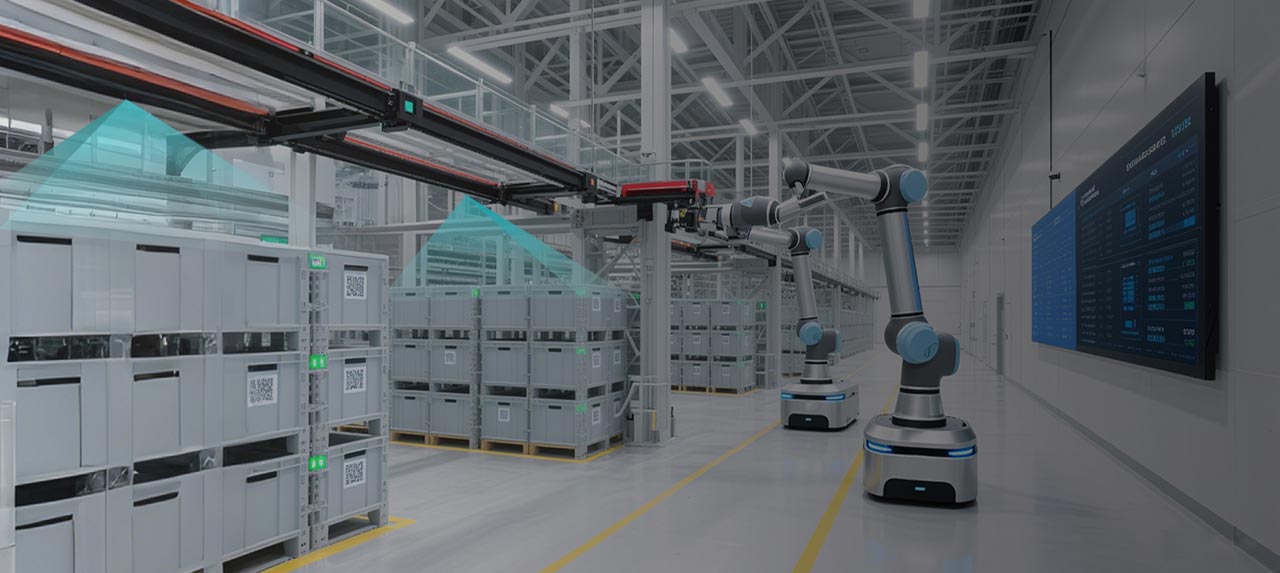
Reconstruct surface geometry from multi-point or scanning distance data for volume calculation of bins, piles, or warehouse objects.

LiDAR scanning storage bins in an automated factory for volume calculation

Scenario

Application scenario

Volume is not a single distance. The system must cover the surface, establish coordinates and an empty reference, then handle occlusion, edges, and outliers in a separate algorithm.

Engineering problem

  • A single point distance does not provide three-dimensional volume.
  • Occlusion, edges, and irregular surfaces affect reconstruction.
  • Sensor count, scan coverage, and reference coordinates define the measurable area.

Why LiDAR

Multi-point or scanning LiDAR provides spatial surface-distance data for a volume algorithm; calibration and software generate the final volume.

Workflow

  1. Define the measurement zone, smallest/largest object, and allowed occlusion.
  2. Design sensor count, position, coverage, and coordinate reference.
  3. Capture empty and loaded data for calibration, filtering, and reconstruction.
  4. Validate algorithm error and maintenance interval with known-volume objects.

Technology comparison and selection

DimensionConditionLiDARAlternativeAlternative performanceConclusion
Surface geometry dataCompare on the real target, mounting path, environment, control logic, and project acceptance criteria; do not compare nominal maximum range alone.Multi-point or scanning data can provide input to surface reconstruction and volume algorithms.Single-point ranging / weighingA single point describes local range only; weighing provides mass rather than geometric volume.

Treat coverage, coordinates, calibration, filtering, and algorithms as one system; a single sensor does not directly produce a volume result.

公开来源公开来源 · Verified 2026-08-24

Scroll horizontally to view all columns

Installation and integration

  • Define the target, measurement axis, occlusion, wiring, and mounting space first; connect the current product manual to the target controller and record the model, interface, orientation, offset, and delivered revision.

    Volume-measurement solution · Target controller or host system · Target hardware and software release verified before deploymentLR10 Series product material · Verified 2026-08-24
  • Before connecting business control logic, validate healthy data, timeout handling, stop behavior, and fallback with real targets, worst-case distance, ambient light, and motion.

    Volume-measurement solution · Target controller or host system · Field procedure and fault handling verified on the target systemLR10 Series product material · Verified 2026-08-24

Operating limits

  • LiDAR provides distance or spatial-sensing input and does not by itself provide system positioning, safety integrity, braking, flight-stack fusion, or business outcomes; design and validate those functions separately on the target system.

    Volume-measurement solutionLR10 Series product material · Verified 2026-08-24

Sources

Supporting sources

Verifiable LR10 Series reference

Current material lists warehouse volume measurement as an application direction; project results still require separate calibration and acceptance. The current public material supports verification of sensor specifications and interfaces; it does not establish vehicle-level performance, system safety level, or project results.

Use the stated target, reflectivity, ambient-light, mounting, and delivered-revision conditions; revalidate in the field.

LR10 Series product material

FAQ

Frequently asked questions

Can one single-point LiDAR directly provide cargo volume?

No. Volume needs multiple spatial points, coverage design, coordinate calibration, an empty reference, and a geometry algorithm. One point only describes one local position.

Resources

Resources and references

Confirm the selection with real mission conditions

Share the operating height, target surface, environment, mounting space, and flight-stack version. Our engineering team can help plan selection and validation.

Talk to an engineer

Product inquiry

Talk to a product specialist

Tell us what you need and our team will get back to you.

Product inquiry

Inquiry sent

Your inquiry has been received. We will be in touch soon.