
Official articles
Liquid Level Detection - Benewake Laser Distance Sensors
Benewake TF-NOVA LiDAR sensors provide non-contact, high-precision liquid level measurement and gas well water ingress monitoring solutions for petrochemical, water treatment, and
Benewake TF-NOVA LiDAR sensors provide non-contact, high-precision liquid level measurement and gas well water ingress monitoring solutions for petrochemical, water treatment, and gas facility management, reducing operational costs and enhancing safety.
Tank/Cylinder Liquid Level Detection
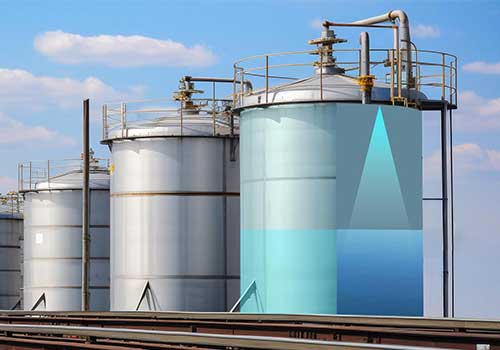
The Benewake TF-NOVA LiDAR liquid level measurement sensor uses non-contact measurement, installed above small storage tanks with a maximum detection depth of 7-10 meters. It features high precision and real-time measurement capabilities. This sensor reduces operational costs, improves productivity, eliminates manual inspection, effectively prevents accidents, and ensures the safety of personnel and equipment. It provides unprecedented convenience and reliability for fields such as petrochemicals, water treatment, tank management, and food and beverage.
Technical Highlights
- High-Precision Measurement: Utilizing advanced laser ranging technology, the LiDAR can penetrate complex environments such as fog and steam, achieving centimeter-level high-precision liquid level measurement to ensure data accuracy.
- Non-Contact Detection: A pure solid-state LiDAR solution that does not require direct contact with the liquid surface, effectively avoiding damage caused by medium corrosion or contamination common in traditional mechanical or float level gauges, thereby extending equipment service life.
- Broad Adaptability: Suitable for clear liquids, turbid liquids, or high-viscosity media, adapting to various working conditions.
- High Protection Rating: Front window lens is IP65 waterproof.
- Easy Installation and Maintenance: Simple to clean and easy to integrate.
Recommended Product
- TF-NOVA Line Spot LiDAR
Gas Well Water Ingress Detection
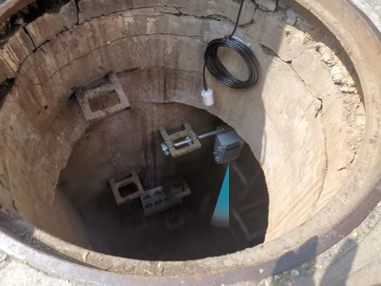
Gas pipelines and gas wells need to remain dry; water ingress can affect the normal operation of pipelines and equipment. Existing monitoring methods rely on manual inspections or emergency repairs only after severe water ingress is detected, resulting in high maintenance costs and serious equipment erosion. By installing LiDAR sensors inside gas wells, the presence of water can be monitored in real-time. Under normal dry conditions, the radar outputs stable distance values. If accidental water ingress occurs, the radar, being sensitive to water surfaces, will show data fluctuations. These fluctuations trigger alarm signals to the backend, notifying maintenance personnel for timely emergency response, thus reducing inspection costs and improving repair efficiency.
Core Highlights
- Compact size, convenient for integration and installation;
- High sensitivity, rapid response to abnormal conditions;
- Ultra-high precision, millimeter-level;
- Long service life, low maintenance cost;
- Strong anti-interference capability, unaffected by ambient light, rain, or fog.